Our top pick
The NOCO Boost GB70 combines higher output with useful 12V power and a bright torch. It is suited to larger petrol vehicles, vans and campervans, making it a versatile step up from the GB40.
8.9/10View on Amazon
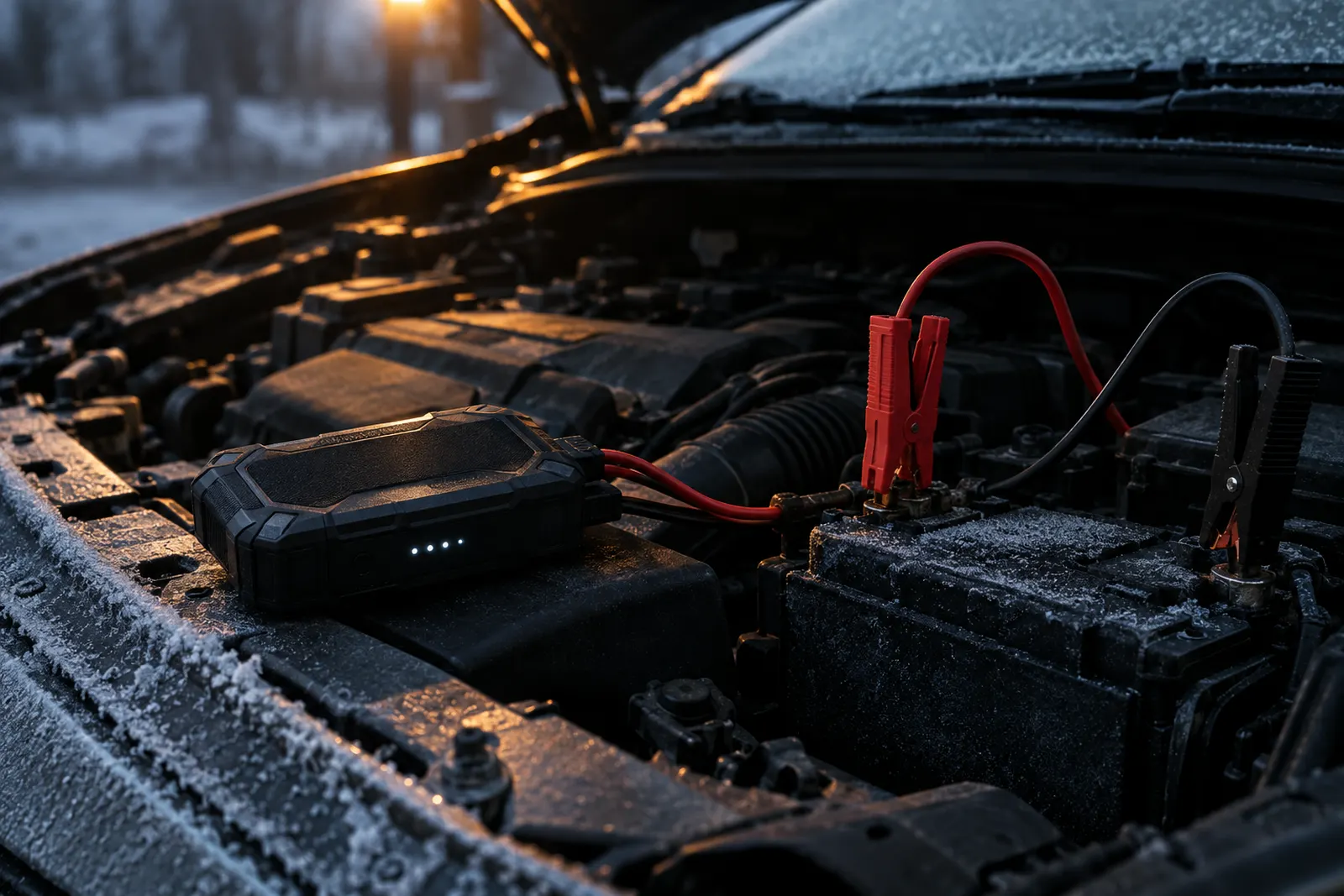
How we make money: we may earn a commission if you buy through our Amazon links, at no extra cost to you. Rankings are based on research, not payment. How we rank · Disclosure
A portable jump starter, also called a car battery jump pack, lets you restart a car with a flat battery without a second vehicle or jump leads. This guide ranks the current top 10 Amazon UK best-selling jump starters for 2026, from compact packs for small petrol cars to high-output boosters for diesel vans and motorhomes. Our order is based on research into specifications and thousands of UK owner reviews, not hands-on testing.
Our top recommendation is the NOCO Boost GB70, a higher-output pack with useful 12V power and a bright torch for owners of larger vehicles. For a more affordable option, the TREKURE 5000A Jump Starter is our budget pick: it is lightweight and feature-packed, though its headline power claims vary across the listing.
The NOCO Boost GB70 combines higher output with useful 12V power and a bright torch. It is suited to larger petrol vehicles, vans and campervans, making it a versatile step up from the GB40.
The TREKURE 5000A is a lightweight, feature-packed choice with a bright multi-mode light and power-bank function. Its headline power claims differ across the listing, so check the specifications carefully before buying.
A well-rounded, compact booster with strong owner feedback and useful protection features for everyday cars.
NOCO Boost GB70 ranked #1
Rated for engines up to 6.0L diesel and 8.0L petrol, with USB and 12V outputs and a 400-lumen torch.
See it in the rankingsTREKURE 5000A Jump Starter ranked #2
A compact budget-band pack with a power-bank function and a bright multi-mode light.
See it in the rankingsNOCO Boost GB40 ranked #3
Rated for up to 6.0L petrol and 3.0L diesel engines, with spark-proof clamps and an IP65 rating.
See it in the rankingsNOCO Boost X GBX55 ranked #9
Rated for up to 5.0L diesel engines, with 60W USB-C Power Delivery for quicker recharging.
See it in the rankingsNOCO Boost GB20 ranked #6
A pocket-sized 500A pack for petrol engines up to 4.0L. Not recommended for diesel engines.
See it in the rankings| Rank | Product | Score | Buy |
|---|---|---|---|
| 1 | NOCO Boost GB70 Best overall Premium |
8.9 | Amazon |
| 2 | TREKURE 5000A Jump Starter Best budget pick Budget |
8.9 | Amazon |
| 3 | NOCO Boost GB40 Mid-range |
8.8 | Amazon |
| 4 | NOCO Boost X GBX45 Best for fast USB-C charging Premium |
8.8 | Amazon |
| 5 | FLYLINKTECH 5000A Jump Starter Best for wet-weather features Budget |
8.8 | Amazon |
| 6 | NOCO Boost GB20 Best for small petrol cars Mid-range |
8.6 | Amazon |
| 7 | Ring UltraBoost 1500A Best display and cable reach Mid-range |
8.6 | Amazon |
| 8 | NOCO Boost GB150 Best for farm and workshop use Premium |
8.6 | Amazon |
| 9 | NOCO Boost X GBX55 Best for motorhomes Premium |
8.5 | Amazon |
| 10 | NOCO Boost X GBX155 Best for very large engines Premium |
8.2 | Amazon |
Price bands: Budget Mid-range Premium show where each product sits against the other nine in this guide, based on typical Amazon UK prices when we last checked. Prices change often, so tap through to see today's price.
A higher-output NOCO pack with useful 12V power and a bright torch, suited to bigger engines than the GB40.
Best for: Owners of larger petrol vehicles, vans or campervans who want a capable, brand-name booster.
Skip it if: You prioritise minimal size and weight, or only need support for a small petrol car.
A feature-packed, lightweight option with encouraging owner feedback, though its headline power claims differ across the listing.
Best for: Budget-conscious drivers wanting a compact pack with a bright multi-mode light and power-bank function.
Skip it if: You want a long-established brand or need independently verified output figures for a larger vehicle.
A well-rounded, compact booster with strong owner feedback and useful protection features for everyday cars.
Best for: Drivers seeking a reputable, portable jump starter for petrol cars and moderate-sized diesels.
Skip it if: You need extra headroom for a large diesel, or want a display showing the remaining charge.
A useful middle ground for bigger cars, with fast USB-C charging and a strong record of positive owner reports.
Best for: Drivers wanting a modern NOCO booster with USB-C Power Delivery and support for mid-sized diesels.
Skip it if: You want a lower-cost option or need its USB-C fast charging without buying a suitable charger separately.
A compact kit with an IP67 housing and 12V accessory adapter, balanced by mixed reports on starting larger vehicles.
Best for: Drivers who value a waterproof-rated casing and want to power compatible 12V accessories.
Skip it if: You need a proven choice for a large vehicle with a completely flat battery.
A particularly compact choice for petrol cars and motorcycles, with strong owner feedback but no diesel recommendation.
Best for: Drivers of small petrol cars or riders wanting an easy-to-store emergency booster.
Skip it if: Your vehicle is diesel or has a larger engine than the listing’s 4.0L petrol limit.
A straightforward alternative with an LCD charge display and longer leads, backed by encouraging early owner feedback.
Best for: Drivers wanting a recognisable UK automotive brand, a charge display and extra flexibility around battery terminals.
Skip it if: You need extensive long-term owner feedback or a stated torch, USB output or water-resistance rating.
A substantial, high-output booster with a built-in voltmeter, aimed at owners of vans, 4x4s and working vehicles.
Best for: Drivers or workshops needing a robust pack for larger vehicles, tractors or repeated jump-starting duties.
Skip it if: You want something light and glovebox-sized, or prefer USB-C charging.
A versatile choice for motorhomes and larger cars, with fast USB-C charging and owner reports of useful charge retention.
Best for: Motorhome and van owners who want extra starting capacity and USB-C power delivery in one pack.
Skip it if: You only drive a small car, or want a pack with a display for checking battery status.
The highest stated output here targets very large engines, but its price and reports of charging faults call for caution.
Best for: Drivers, fleet users or agricultural owners who need a high-output pack for large petrol or diesel engines.
Skip it if: You need a lightweight, inexpensive option or place a premium on consistently positive long-term reliability reports.
Start with your vehicle’s fuel type and engine size, then check the jump starter’s stated limits. Diesel engines generally need more starting power than petrol engines of similar capacity, so avoid choosing on peak amps alone. The listings give petrol and diesel limits separately; the NOCO GB20, for example, is intended for petrol engines and is not recommended for diesels. For a van, 4x4, motorhome or older vehicle, consider a model with more headroom, such as the GB70, GBX55 or GB150. These are manufacturer claims rather than a guarantee that a pack will start every vehicle or every flat battery.
Peak current is one useful point of comparison, but it should not be the only one. A higher advertised figure does not automatically mean a better match for your car: check the stated engine capacity, fuel type and the rest of the specification. Some listings in this selection give different current figures in the product title, bullets and specification table. TREKURE, for instance, has differing peak-current claims, so treat its figures cautiously and check the live Amazon listing before buying. If the vehicle is especially large or used for work, favour a clearly specified model with capacity beyond your usual needs rather than relying on a headline number alone.
Look for clear connection instructions and protections such as spark-proof operation and reverse-polarity protection. These features can help reduce the risk of a connection mistake, but they do not replace reading the manual and following the vehicle maker’s guidance. Lead length matters too: short clamps can make it awkward to reach battery terminals or an approved earth point under the bonnet. The Ring UltraBoost listing highlights longer leads and an LCD charge display, while NOCO models specify safety protections. If you are unfamiliar with jump-starting, read the supplied instructions in advance and do not improvise connections.
A jump starter is only useful if it has enough charge when needed. Check how it recharges, whether the required wall charger is included, and how often the maker recommends topping it up. Some NOCO Boost X models support 60W USB-C Power Delivery, but the compatible charger is not included in the stated package. Store the pack somewhere accessible, dry and within its specified temperature limits rather than burying it under luggage. Several listings recommend periodic recharging when the unit is not in use. A quick charge check before a long winter journey or holiday can help you avoid discovering a flat booster at the roadside.
Many packs double as USB power banks and include an LED torch, which can be handy during a breakdown after dark. Some have extra lighting modes or a 12V output for compatible accessories such as an inflator. These features are useful only if they suit your equipment, so check the connection type and output details before relying on them. A charge display can make the remaining capacity easier to read than simple indicator lights. If you mainly need emergency starting for a small car, a compact model may be better value than paying for a large screen, laptop charging or a much higher output you are unlikely to use.
Owner feedback can reveal practical details that specifications miss, including whether leads feel short, how the device stores its charge and how easy the controls are to understand. Look for reports from owners with a similar engine size and fuel type, and distinguish occasional emergency use from frequent workshop or fleet use. Reviews in this data include some reports of charging or durability problems as well as many successful starts; no product is immune from individual faults. Amazon listings and stock can change, so check the latest specification, warranty terms, package contents and price before ordering. Keep breakdown cover as a backup rather than treating a jump starter as a substitute.
Check the engine capacity and fuel type shown in your vehicle handbook, then compare them with the jump starter’s stated petrol or diesel limit. It is sensible to leave some headroom, particularly for a diesel, van or 4x4. Peak amps alone are not enough to confirm compatibility, and manufacturer limits are not a guarantee of starting every vehicle.
Many portable jump starters are listed for both petrol and diesel vehicles, but their diesel engine limits are usually lower. Check the model’s specific diesel capacity before buying. Some smaller units, including the NOCO GB20 in this guide, are not recommended for diesel engines. Follow both the booster manual and your vehicle handbook.
Some listings say their units can help with a fully discharged battery, and owners report successful starts in some such cases. Results depend on the battery, vehicle and condition of the electrical system; a damaged or failed battery may need replacement rather than a boost. Follow the device instructions, and seek roadside assistance if the car will not start.
Follow the manufacturer’s advice for the specific model. Some listings recommend checking and recharging a stored unit every few months, while owners often describe topping theirs up periodically. Check its charge before a long journey or winter trip, and after using it. Avoid leaving it discharged for long periods or storing it outside its stated conditions.
Most products in this selection include a USB power-bank function, although the available output and charging speed vary. The NOCO Boost X models advertise USB-C Power Delivery, while other packs list USB charging or additional 12V outputs. Check the actual ports and supplied cables. The jump starter’s own charge will decrease when you use it to power other devices.
Use and store the unit in line with its manual, including any temperature, charging and storage instructions. Do not leave it in conditions outside its stated limits, and keep it secure so it cannot be damaged by loose luggage. Before connecting it, read the instructions for your vehicle and the jump starter. If you are unsure, contact breakdown support or a qualified professional.
For most drivers, yes. A good jump starter can restart a car with a flat battery without another vehicle, and most double as a power bank and torch. The key is choosing one rated for your engine size and fuel type, keeping it charged, and treating it as a way to get going rather than a fix for a failing battery.
Yes. Jump pack, jump starter, booster pack and car battery jump pack all describe a portable battery with clamps that delivers a short burst of power to start an engine. Larger units are sometimes called booster packs, but the job is the same.
We started with the current top 10 best sellers in this category on Amazon.co.uk (checked on 2 November 2026), leaving out accessories such as mounts and cables. For each product we read the full listing and specifications, manufacturer information and independent coverage where available, then analysed recurring themes in verified UK owner reviews. Every product is scored on owner satisfaction (35%), features and specification (30%), value for money (20%) and build quality and reliability (15%), with a small adjustment for products with a long track record of owner ratings. We do not physically test products. Read our full method.